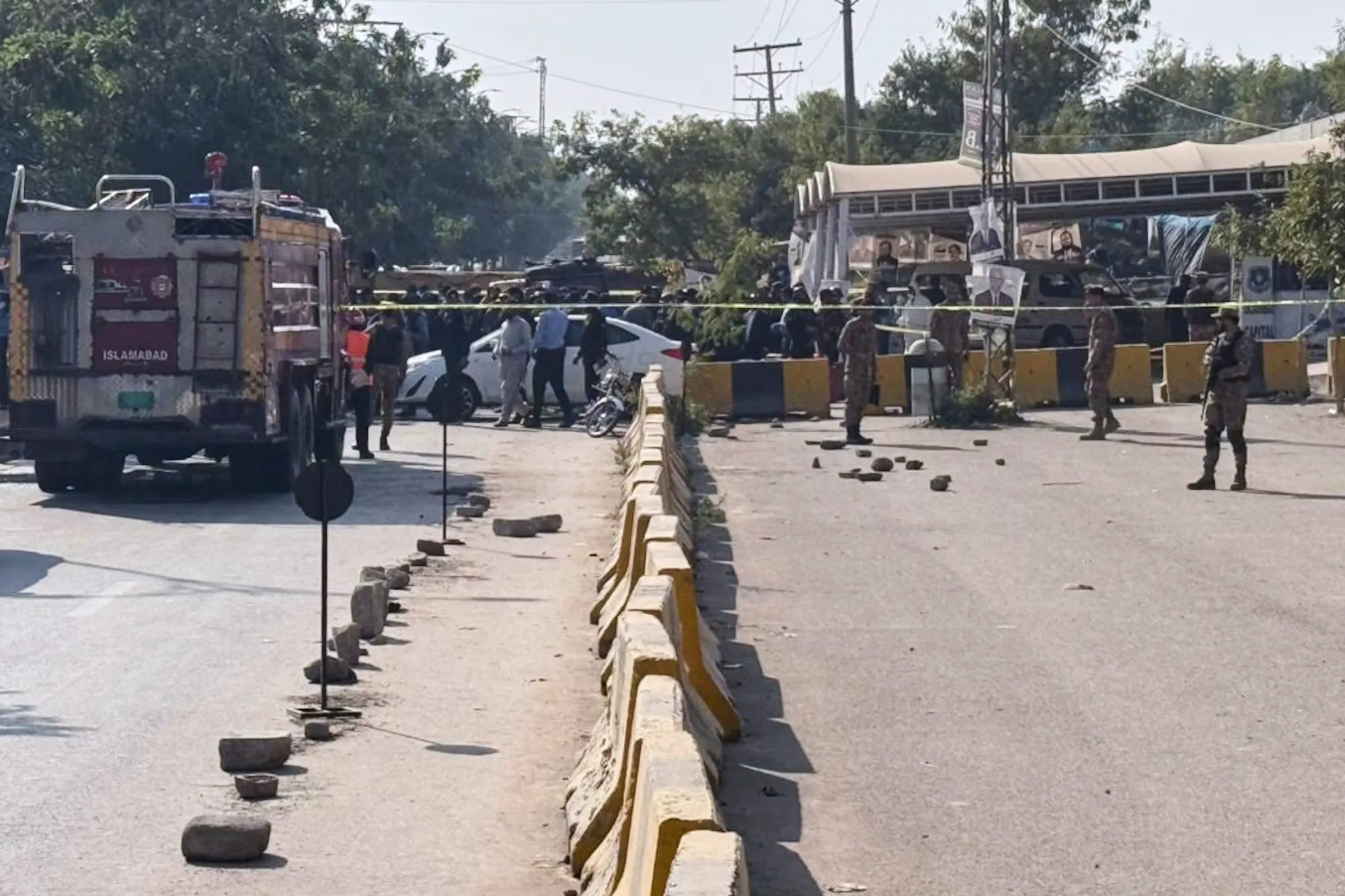
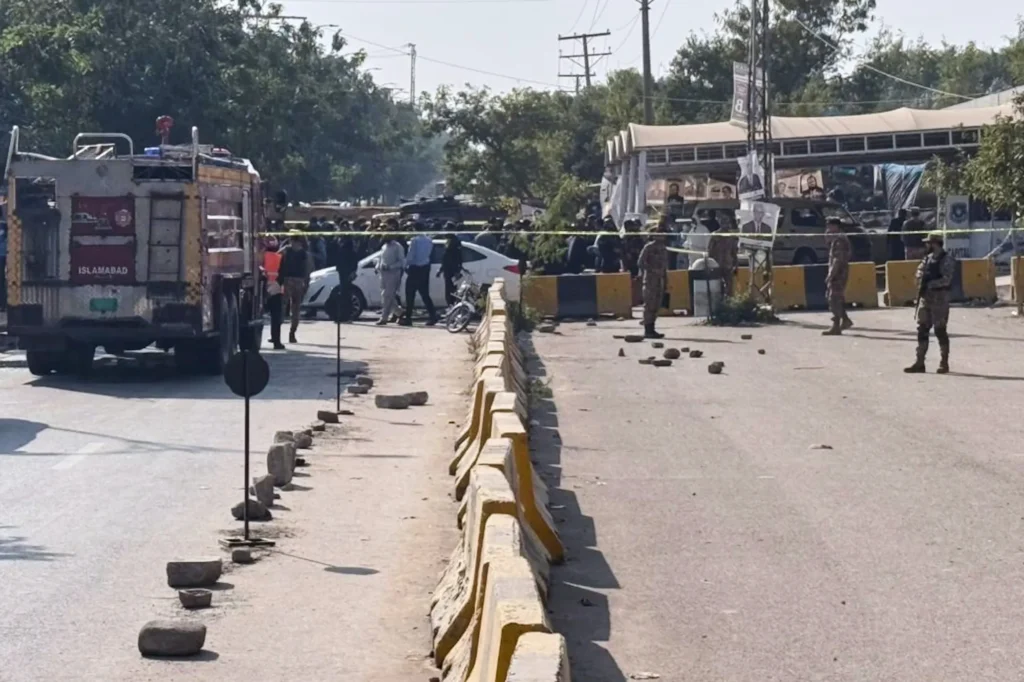
Smoke rises above the Islamabad court after a deadly suicide blast that killed 12 and injured dozens.
What Really Happened in the Islamabad Court Blast?
A deadly suicide blast in Islamabad has shocked Pakistan and the world. On November 11, 2025, a suicide bomber detonated explosives outside the Islamabad District and Sessions Court, killing at least 12 people and injuring more than 30 others. This terror attack struck at the heart of Pakistan’s capital city, raising fears about security and national stability.
Where Did the Islamabad Blast Happen?
The explosion occurred outside the G-11 district court complex around 12:39 p.m. According to police, the bomber tried to enter the court on foot but failed to pass through security, then detonated his explosive vest near a police vehicle. The blast sent flames, smoke, and debris through the air, damaging vehicles and nearby shops.
Witnesses reported scenes of chaos: people running for safety, lawyers and litigants lying injured, and security forces rushing to seal the area. The explosion site quickly turned into a crime scene, cordoned off by bomb-disposal squads and emergency services.
Who Are the Victims of the Islamabad Suicide Attack?
The Islamabad blast victims include lawyers, police officers, and civilians who were present at the court for hearings. Hospitals in Islamabad were placed on high alert, and several injured victims remain in critical condition.
This terrorist attack has been described as one of the deadliest in the capital in nearly a decade. It also highlights the increasing threat of urban terrorism in Pakistan.
How Did the Government React to the Islamabad Blast?
The Government of Pakistan immediately condemned the suicide attack.
- Prime Minister Shehbaz Sharif called it a “heinous act of terrorism” and vowed that the perpetrators would be brought to justice.
- Defence Minister Khawaja Asif said Pakistan was now in a “state of war” against terrorism.
- Interior Minister Mohsin Naqvi ordered a nationwide security alert and promised a comprehensive investigation.
Authorities have increased security around courts, government offices, and embassies in Islamabad. The Red Zone was temporarily sealed, and police checkpoints were strengthened throughout the city.
Why Was the Islamabad Court Targeted?
Analysts believe that terrorist networks targeted the Islamabad court to send a symbolic message—challenging the judiciary, law enforcement, and state authority. Such an attack in Pakistan’s capital city shows that militant groups are attempting to undermine public confidence in national security.
Experts say this could mark a shift in militant strategy, moving from rural regions to urban centers. By hitting a judicial complex, the attackers sought maximum media attention and psychological impact.
What Are the Security and Political Implications?
The Islamabad blast has far-reaching implications:
- National Security Threat: The attack proves that terror cells still have the ability to strike in the heart of Pakistan.
- Political Pressure: With elections nearing, the Sharif government faces growing pressure to ensure public safety.
- Regional Tensions: Officials hinted at cross-border links, possibly pointing toward militant sanctuaries in Afghanistan.
- Public Fear: Ordinary citizens are now questioning the safety of Islamabad, a city long considered secure.
Could the Islamabad Blast Have Been Prevented?
Security experts argue that while intelligence agencies have foiled many plots, urban vulnerability remains a challenge. The bomber’s ability to reach a high-security zone suggests security lapses that need urgent review.
Pakistan’s Counter Terrorism Department (CTD) and National Counter Terrorism Authority (NACTA) are under pressure to tighten surveillance, improve inter-agency coordination, and monitor radical networks online and offline.
What Happens Next?
The investigation is ongoing. No group has immediately claimed responsibility, but intelligence sources suspect Tehreek-e-Taliban Pakistan (TTP) or related networks. The government has promised swift retaliation against those behind the Islamabad suicide blast.
Meanwhile, funeral prayers for the victims have been held across the capital, and social media is filled with messages of grief, anger, and solidarity. Citizens demand that terrorism in Pakistan be confronted with stronger policies and zero tolerance.
Conclusion: A Wake-Up Call for Pakistan
The Islamabad court blast is more than a tragic headline—it’s a national warning. With 12 lives lost and dozens injured, Pakistan must reassess its counter-terrorism strategy and reinforce its security institutions.
As the capital city mourns, one question remains: Can Pakistan ever be completely safe from terrorism again?
About The Author