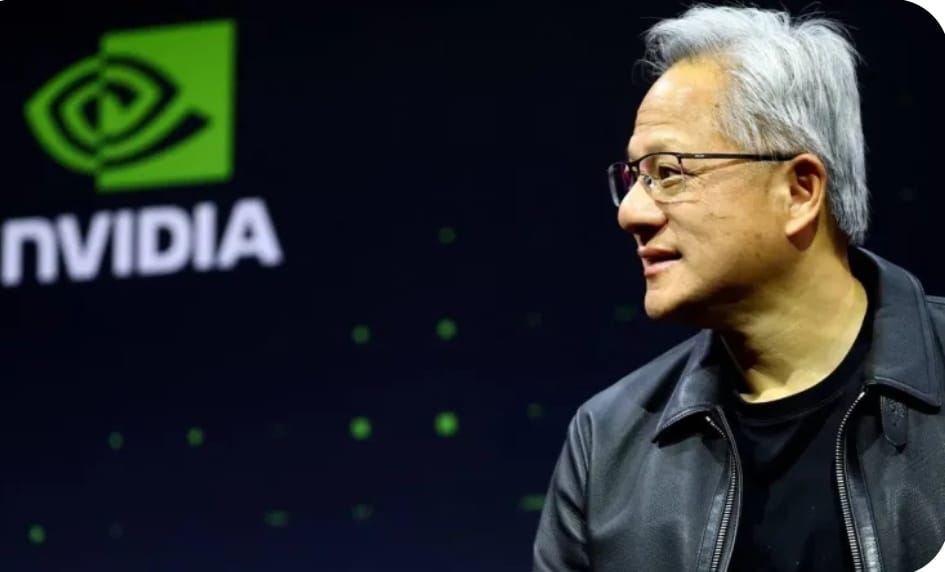
"China is rising fast in the global AI race."
Title: Is China Really Winning the AI War? NVIDIA CEO’s Bold Warning
Meta Description (160 words, SEO-Optimized):
NVIDIA CEO Jensen Huang has issued a bold warning: China could soon dominate the global AI race. As tensions rise between the U.S. and China over chip technology and artificial intelligence innovation, experts are questioning who will lead the future of tech. This in-depth analysis explores China’s AI growth, NVIDIA’s role, U.S. export bans, and the global implications of an AI power shift. Learn how China’s rapid advancements, government support, and massive data resources may give it an edge in the world’s most important technological race.
Is China Really Winning the AI War? NVIDIA CEO’s Bold Warning
Artificial Intelligence (AI) has become the defining technology of our time — shaping everything from healthcare and finance to national defense. However, a new statement from NVIDIA CEO Jensen Huang has reignited a global debate: Is China about to win the AI race?
NVIDIA, the world’s leading chipmaker for AI processing, plays a crucial role in the development of machine learning, data analytics, and high-performance computing. But Huang’s recent warning suggests that restrictive policies by the U.S. could backfire — potentially helping China accelerate its own AI ambitions.
NVIDIA’s Warning: A Shift in the AI Power Balance
Jensen Huang’s message is clear: by limiting China’s access to advanced NVIDIA chips, the U.S. might unintentionally strengthen China’s resolve to develop homegrown alternatives. “If they can’t buy from us,” Huang noted, “they’ll build it themselves.”
China’s commitment to technological self-sufficiency is already visible. The government has poured billions of dollars into AI research, chip design, and supercomputing infrastructure. Local companies like Huawei, Baidu, and Alibaba are advancing rapidly — creating AI systems capable of competing with those built in Silicon Valley.
China’s Rapid AI Growth
China’s AI strategy isn’t new. The country announced its national AI development plan in 2017, aiming to become the world leader in AI by 2030. Since then, China has made major progress across multiple fronts:
- Massive Data Advantage: With over a billion internet users, China has access to vast datasets that fuel machine learning models.
- Strong Government Investment: AI is a national priority. China’s five-year plans consistently emphasize innovation, automation, and digital transformation.
- Tech Giants Leading Innovation: Companies like Tencent and Baidu are pioneering AI applications in health tech, smart cities, and autonomous driving.
- Talent Development: China’s universities and research labs are producing a new generation of skilled AI engineers and data scientists.
Together, these factors are positioning China as a powerful contender in the global AI landscape.
The U.S.–China Tech Rivalry Intensifies
The United States remains the global leader in advanced AI chips, led by NVIDIA, AMD, and Intel. However, Washington’s export restrictions — designed to limit China’s access to high-end processors — have created new challenges for global supply chains.
These restrictions aim to prevent China from using advanced chips for military or surveillance purposes. Yet, according to Huang, they may also slow innovation and fragment the global AI ecosystem.
China, in response, has intensified efforts to produce domestic alternatives. Companies like SMIC and Huawei’s HiSilicon are developing new chip architectures to close the technology gap. While these chips aren’t yet as powerful as NVIDIA’s, progress has been rapid.
NVIDIA’s Global Role in AI Development
NVIDIA’s GPUs (Graphics Processing Units) are the heart of AI computing. From OpenAI’s ChatGPT to Tesla’s self-driving systems, NVIDIA hardware powers the world’s most advanced AI models. Without access to these chips, Chinese companies must find creative solutions — and they’re doing just that.
Huang’s concern is that cutting China off might reduce global collaboration and innovation. He believes that AI should be developed responsibly and collectively, rather than through geopolitical competition.
What This Means for the Future of AI
If China continues at its current pace, it could soon become a global AI powerhouse. The implications are enormous:
- Economic Impact: AI-driven automation could boost China’s productivity and global competitiveness.
- Military Applications: AI may play a major role in defense, surveillance, and cybersecurity.
- Technological Independence: China’s success in chip design could reduce reliance on Western suppliers.
- Global Standards and Ethics: With China’s influence growing, global AI ethics and governance frameworks may shift toward Beijing’s standards.
For the U.S. and its allies, maintaining leadership in AI will require more than export controls. Investment in research, education, and responsible innovation will be key to staying competitive.
Conclusion
NVIDIA CEO Jensen Huang’s warning is more than a prediction — it’s a wake-up call. The AI race isn’t just about who builds faster chips or trains larger models; it’s about who shapes the future of intelligence, data, and power.
As China doubles down on innovation, the global AI landscape is evolving faster than ever. Whether China wins the AI war or not, one thing is certain — the world’s technological future will be defined by how these two superpowers compete and collaborate.
In this new era, success will depend on balance: open collaboration, ethical development, and global innovation that benefits all.
SEO Tags (in a row):
China AI race, NVIDIA CEO warning, Jensen Huang news, global AI competition, U.S. China tech war, AI chip export ban, China AI development, AI technology 2025, artificial intelligence race, NVIDIA China update, AI power shift, Huawei AI chips, Baidu AI growth, AI future trends, China vs USA AI, AI innovation news, NVIDIA GPU ban, AI leadership 2025, AI strategy China, tech rivalry
About The Author